



Greene Tweed Innovation Award Winner Spotlight: Semi-automated Packaging Line — Where Humans and Robots Collaborate

Humans and robots now make the ultimate team at Greene Tweed’s Selma facility. To meet the growing demand for faster, more consistent packaging operations, a team of engineers and technicians built a semi-automated packaging line that integrates advanced robotics, cutting-edge software, and skilled human oversight to transform efficiency, precision, and productivity at the manufacturing floor.
Recognizing this outstanding achievement, Greene Tweed (GT) awarded our prestigious Innovation Award, which spotlights and rewards exceptional efforts to push the boundaries of innovation and collaboration, to the three-member team driving this effort: Felipe Jose Leonardo Quezada - Senior Process Improvement and Automation Engineer; James Garza - Systems Control Engineer; and Robert Sanchez - Automation Technician.
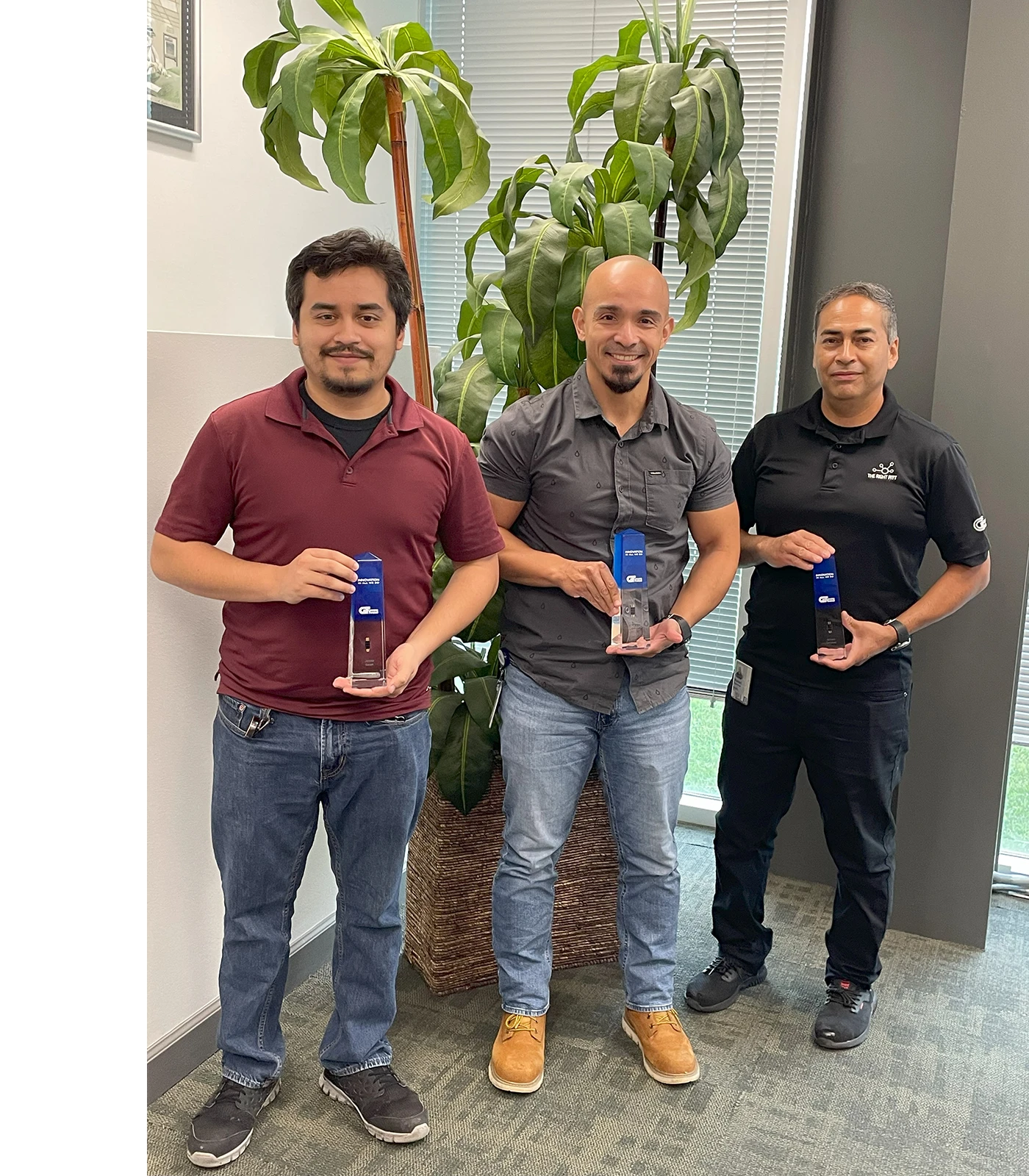
Pictured from left to right:
James Garza, Felipe Quezada and Robert Sanchez
Soon after the special event, where GT COO Justine Franchina and Selma Site Operations Leader Susan Livsey, presented the award to them, we sat down with the winning team to learn about their journey of automation, from conception to creation.
Congratulations. Please tell us about your achievement, and what does this award mean to you personally and professionally?
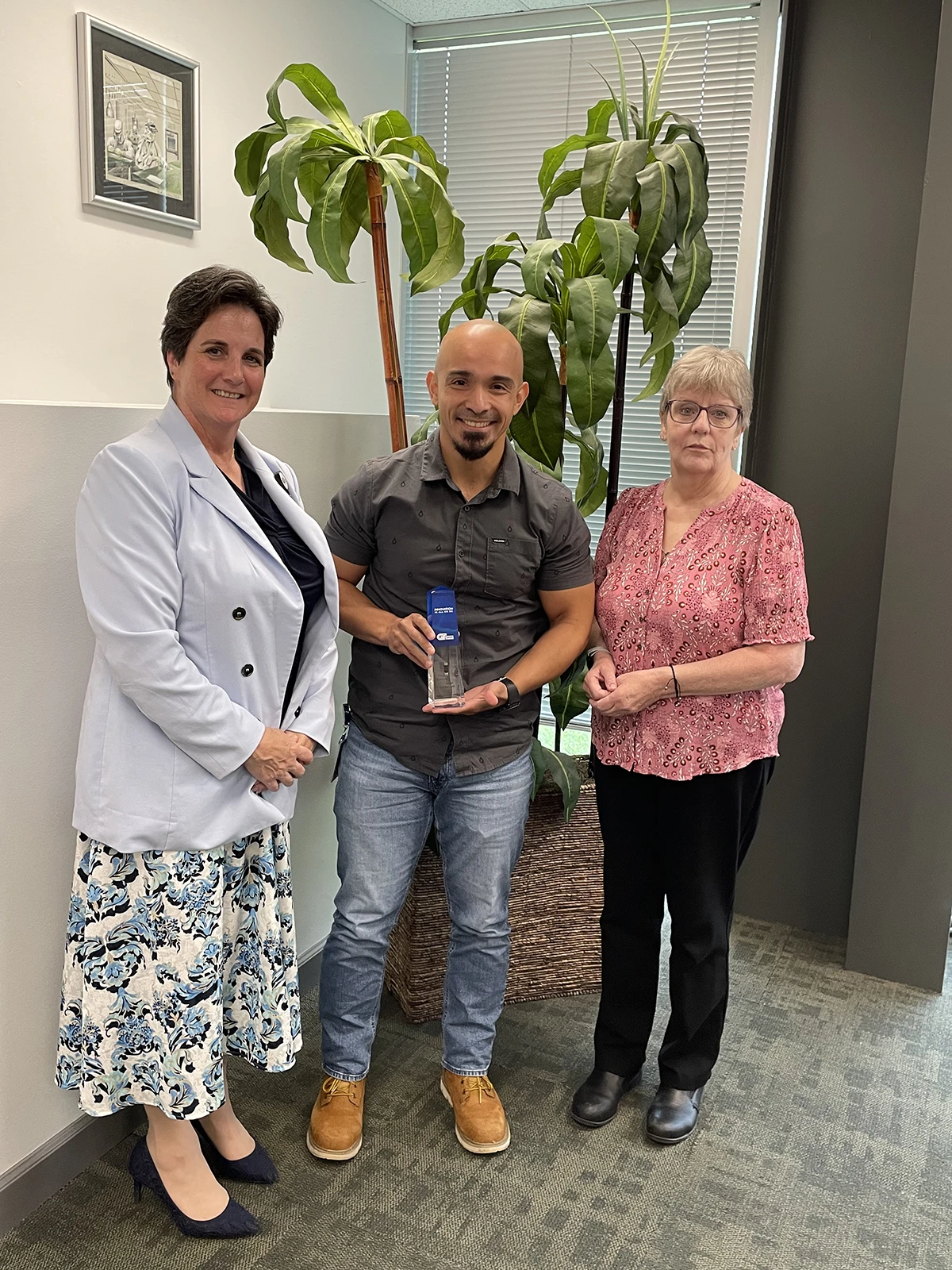
Felipe Quezada: I’m truly honored to receive this award. This achievement reflects not only the outcome of technical innovation, but also the embodiment of trust, collaboration, and shared vision of multiple teams at Greene Tweed. Personally, and professionally, this award reaffirms our belief in the importance of perseverance, teamwork, and the power of aligned objectives. It serves as a reminder that when an organization trusts its people and empowers them to solve complex challenges, meaningful and lasting improvements can be made that benefit both operations and the broader company mission. Pictured: Justine Franchina, Felipe Quezada & Susan Livsey.

James Garza: Receiving the Innovation Award for my role in the automated packaging cell project is both an honor and a surprise. I contributed primarily on the programming and integration side, developing logic, interfaces, and ensuring the system ran reliably in the clean room. While I see this as a team achievement more than a personal one, I appreciate the recognition. Personally, it is gratifying to know that the work I do behind the scenes can make a meaningful impact. Professionally, it reinforces the value of collaborative innovation and cross functional problem solving. The award is validation that the effort to design, program, and integrate automated systems is recognized as a core part of our company. I’m proud to contribute to that. Pictured: Justine Franchina, James Garza & Susan Livsey.
Can you share the story/journey behind the innovation or project that led to this award?
James: The packaging cell project started as a response to increasing demand for speed and consistency in our packaging operations. The vision was ambitious, and it required tight coordination across mechanical design, controls, and safety. On the programming side, we needed to build a system that could handle a wide range of part sizes, while remaining intuitive and serviceable on the floor. This came with several challenges: unplanned interactions between robots and conveyors, managing error recovery in a user-friendly way, and fine-tuning timing sequences so that throughput was not sacrificed for safety. A lot of progress came from staying flexible and listening closely to feedback from operators and techs throughout the deployment process.
Felipe: This project began with a clear objective to enhance packaging efficiency, improve throughput, lower operational cost, and ensure consistent quality. Along the way, we faced multiple challenges. However, these obstacles became opportunities for creativity and problem-solving, thanks to the open collaboration between the Automation, Quality, Production, Facilities, and IT/OT teams. The trust and support of Greene Tweed’s leadership gave us the freedom to explore solutions, while cross-functional teamwork ensured that the project stayed aligned with production realities and long-term company goals.
How do you envision the trajectory of your innovation?
James: I see this project as a steppingstone, opening the door to exciting possibilities in automation systems. This project utilized an SAP API, marking Greene Tweed's first direct connection between plant floor equipment and our SAP system. The goal is to keep building systems that are not only automated, but also self-aware and easy to maintain. I am particularly interested in integrating more analytics into future cells. The vision is to use inspection results to tweak process parameters in real-time to create the "perfect part". Aggregating various department’s business data into a unified namespace will make real-time data-driven decision making a reality.
Any advice for other aspiring innovators?
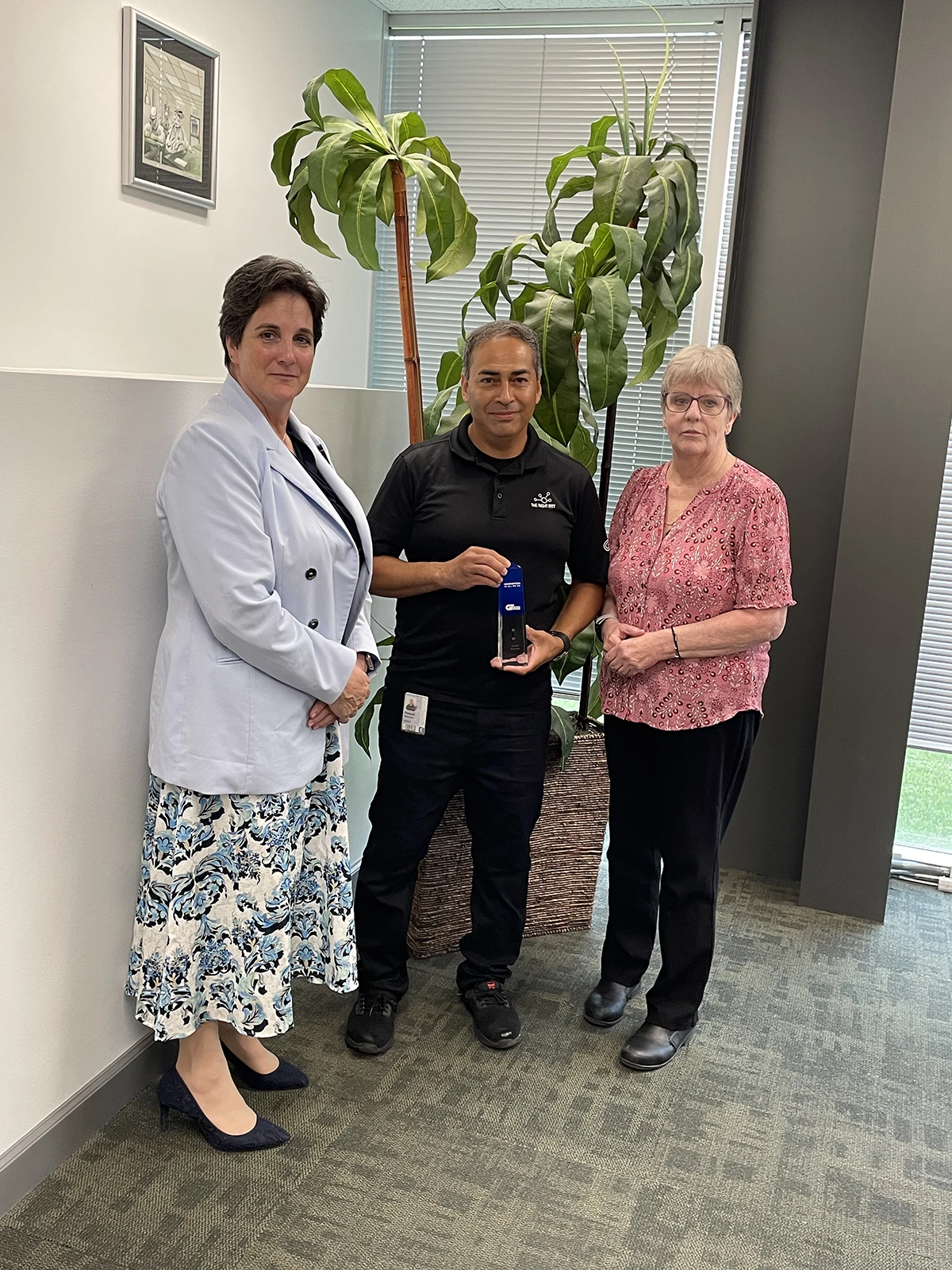
Robert: My biggest advice for aspiring innovators is to stay deeply curious and relentlessly focused on solving real problems. Innovation isn't just about having big ideas - it's about observing the world closely, identifying gaps, and experimenting persistently until something meaningful takes shape. Don't be afraid to fail early and often; those failures are data points that lead you to better solutions. Surround yourself with people who challenge your thinking, stay humble enough to listen, and be bold enough to take action before everything feels perfect. Innovation favors the proactive, not the perfectionist. Pictured: Justine Franchina, Robert Sanchez & Susan Livsey.
James: In my experience, innovation is the result of many small improvements done consistently, with care. Be curious, listen intently, and be willing to abandon an idea when reality does not match the plan. When things go wrong, use the lessons learned to improve the next iteration. Fail fast!
Felipe: For fellow innovators at Greene Tweed, the advice is simple: stay curious, embrace collaboration, have project development system in place, and trust the process. Challenges will arise, but with persistence, teamwork, and the company’s strong support structure, transformative solutions are always within reach.
The semi-automated packaging line at Selma improves operational efficiency and consistency, so Greene Tweed can reliably deliver certainty for its customers where they can’t fail. This commitment to innovation has been a core value driving Greene Tweed’s success for 163 years, and it continues to shape our future.