


PEEK vs PEK vs PTFE
WHAT IS PEEK MATERIAL?
 PEEK (polyetheretherketone) is a semi-crystalline thermoplastic with outstanding chemical resistance and mechanical strength across a broad temperature range, low moisture uptake, solid fire performance, and good dimensional stability. PEEK material properties make it a standout choice for applications requiring durability and performance in extreme conditions. These PEEK material properties also enable designers to consolidate multiple components into a single part, reducing weight and improving overall system efficiency without compromising strength or reliability.
PEEK plastic properties make it strong and rigid with superior creep resistance, and delivers where thermal, chemical, and combustion properties are critical. PEEK polymer retains its properties in harsh high-pressure and high-temperature (HPHT) environments. Arlon 3000XT®, Greene Tweed’s proprietary cross-linked PEEK resin, has proven creep and extrusion resistance at temperatures above 350˚F (177˚C). The unique PEEK plastic properties, such as its high strength-to-weight ratio and resistance to aggressive chemicals, make it a versatile material for demanding applications.
PEEK material is widely recognized for its combination of strength, thermal stability, and chemical resistance, making it ideal for high-performance applications in aerospace, automotive, oil and gas, and medical industries. As an advanced engineering thermoplastic, PEEK material offers long-term reliability in extreme environments, including high temperatures and aggressive chemicals. Whether used in seals, electrical connectors, or structural components, PEEK polymer material delivers high performance and durability where other plastics fail. PEEK material's properties make PEEK material a preferred choice for engineers seeking lightweight, high-strength alternatives to metals. For applications requiring flat, rigid components, PEEK sheet material is often utilized for its excellent dimensional stability and ease of machining.
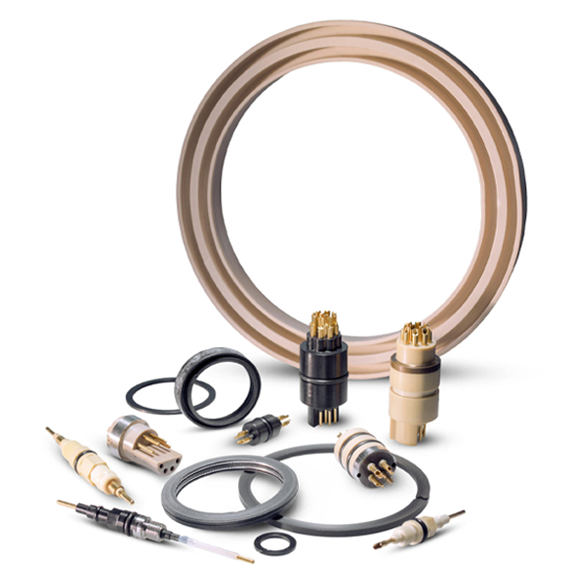
Greene Tweed’s proprietary PEEK resin has proven its superior resistance. As constant innovators, Greene Tweed was the first company to use PEEK material in several oilfield applications. PEEK plastic is often used as the body for electrical connectors to minimize thermal expansion, provide chemical resistance, and to promote effective sealing. Greene Tweed also uses PEEK materials for a variety of sealing system components, sensor housings, aircraft engines, and other demanding environments. The use of PEEK sheet material in these applications allows for precise fabrication of components with consistent performance under harsh conditions.
WHAT IS PEK?
PEK (polyetherketone) is a ketone-based, semi-crystalline thermoplastic. PEK delivers high thermal dimensional stability, low flammability, outstanding chemical resistance, and excellent mechanical properties over a wide temperature range.
Because PEK retains its strength as temperatures rise, it is ideal for applications with vibrational or cyclic loading conditions and where components must withstand high mechanical loads at high temperatures for extended periods of time, such as gears, shafts, bushes, bearings, and miniature rotational precision parts in the aerospace and automotive industries.
PEK retains its properties at temperatures up to 30˚C higher than traditional PEEK materials. Combined with good creep and fatigue resistance, PEK provides a property set uncommon in most polymers.
Like PEEK polymer, PEK is also often used as the body for electrical connectors to minimize thermal expansion and provide effective sealing and chemical resistance.
WHAT IS PTFE?
PTFE (polytetrafluoroethylene) belongs to the fluoropolymer family, separate from poly ether ketones. Fluorine provides additional chemical resistance, especially to strong acids, and a low coefficient of friction, low moisture absorption, and high electrical resistance. PTFE is not as strong as other polymers, but more flexible at low temperatures. PTFE is stable at up to 500˚F (260˚C)
PTFE is used in back-up rings and as a component of specialty seals across a wide range of markets. PTFE is also used for low friction bearing components and electrical insulation or isolation. High purity grades are used extensively in fluid handling systems in the semiconductor market. PTFE material is often chosen for demanding applications where other polymers fail. Its versatility makes it ideal for use in seals, gaskets, back-up rings, and bearing components that must perform reliably in aggressive chemical environments and extreme temperatures. PTFE’s electrical insulation capabilities also make it a preferred material in aerospace, semiconductor, and industrial equipment where high-performance, low-maintenance solutions are essential.
WHAT IS ARLON 3000XT®?
A proven performer, Greene Tweed’s Arlon 3000XT® is a non-filled, cross-linked thermoplastic material that delivers the benefits of conventional PEEK and PEK polymers while providing extended mechanical, electrical, and creep performance at high temperatures above 300˚F (150˚C).
Arlon 3000XT®’s provides superior electrical resistivity properties and reliability in high-temperature environments, safeguarding mission-critical operations in the most severe applications. When it comes to high-temperature and high-voltage applications, Arlon 3000XT® far exceeds traditional PEEK plastic and PEK solutions. Its enhanced PEEK material properties make it an ideal choice for applications requiring exceptional thermal and electrical performance.
Factory tested: Arlon 3000XT® delivers proven performance with 100 times the electrical resistivity of PEEK polymer and 30 times that of PEK at temperatures of 400˚F and above. At room temperature, Arlon 3000XT® has extended capabilities above 20kV.
Download our PTFE vs PEK vs PEEK vs ARLON 3000XT® comparison table:
PEEK vs PEK vs PTFE
Let’s connect to see how PEEK ,PEK, or PTFE can support your business goals.