


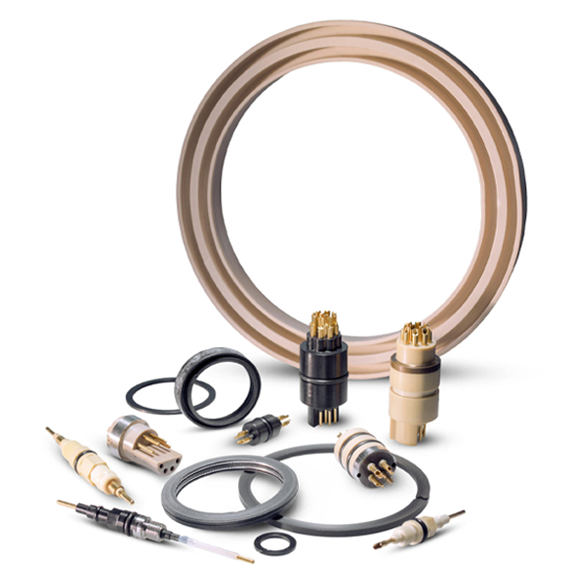

Semiconductor
High-Performance Solutions for Precision Semiconductor Manufacturing

Engineered to withstand the harshest environments, Greene Tweed solutions deliver unmatched reliability, reduced downtime, and enhanced efficiency for leading semiconductor fabs, foundries, and OEMs.

Over 35 years of designing innovative solutions for the semiconductor industry.
Reduces downtime and enhances yields with advanced materials and design.

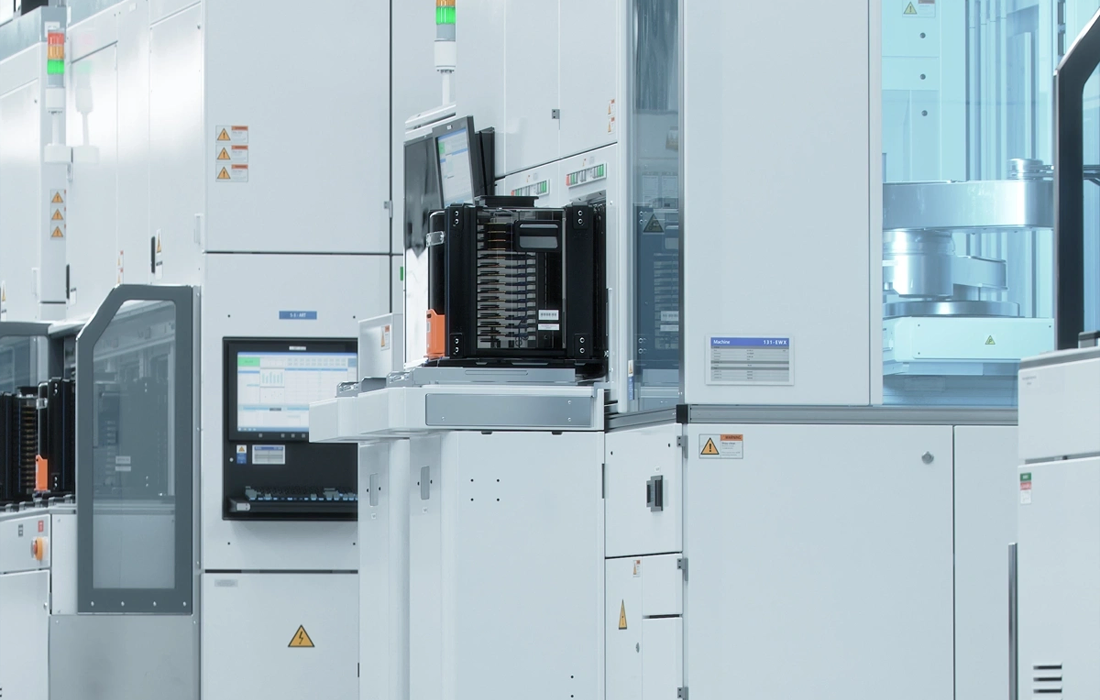

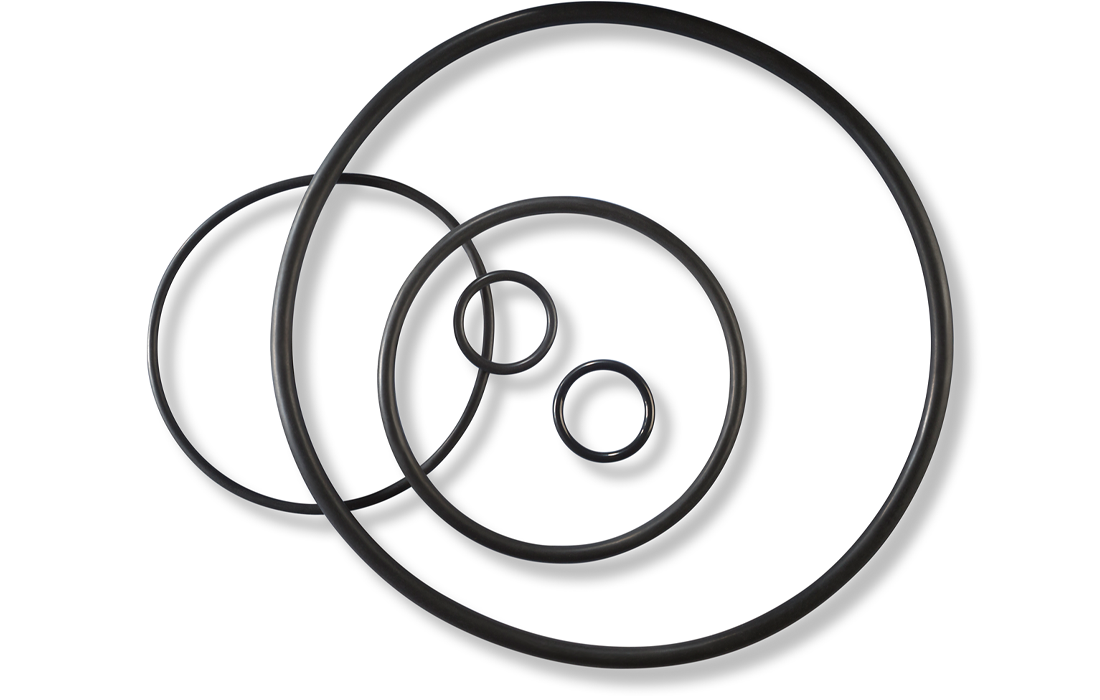


Additional Resources:
Solutions You Can Count On, Expertise You Can Trust
For over 35 years, Greene Tweed has partnered with leading semiconductor fabs and OEMs to provide innovative solutions that tackle the industry’s toughest challenges. From advanced materials to precision designs, our products drive performance and efficiency.
Semiconductor
Articles, News & More:


Semiconductor Frequently Asked Questions
Perfluoroelastomer (or FFKM) seals are the best choice for aggressive semiconductor fabrication processes, because they offer the strongest resistance to aggressive chemicals, extreme temperatures, and plasma environments. Fluoroelastomer (FKM) seals can be a cost-effective option for less demanding processes, legacy tools, and some subfab applications.
Leading chipmakers depend on Greene Tweed’s Chemraz® FFKM sealing solutions to ensure higher equipment uptime and better yields in their harshest applications. For legacy fabs and subfabs, our Fusion® FKM (Fluoroelastomer) seals offer a cost-effective solution tailored to optimize performance and cost.
The ideal seal for a semiconductor application is the one engineered for its specific process conditions, chemistry, and performance requirements. Please see Q2 for a clear breakdown of which sealing solutions are best suited to your semiconductor process.
Selecting seals and components for semiconductor manufacturing requires materials and designs that can withstand aggressive chemistries, plasma exposure, high temperatures, and strict contamination limits while supporting long equipment uptime. High‑performance semiconductor sealing solutions are typically evaluated based on material capability, purity, durability, testing rigor, and supply reliability.
Key capabilities to look for include:
- Advanced materials performance: Seals and components must resist plasma attack, aggressive chemicals, and thermal cycling common in etch, deposition, cleaning, and subfab environments.
- Contamination control: Low outgassing, low extractables, and low particle generation are critical for protecting yield at advanced nodes.
- Application‑specific testing and validation: Materials should be tested under process‑relevant conditions—including plasma, temperature, positive or vacuum pressure, and chemical exposure—to confirm durability, compression set, and contamination performance before fab deployment.
- Design and engineering expertise: Different tool locations (static vs. dynamic, vacuum vs. pressure, hot vs. cold zones) require tailored seal geometries, profiles, and component designs to prevent premature failure.
- Proven reliability: Materials should demonstrate extended service life, reduced maintenance intervals, and consistent performance under real fab conditions.
- Manufacturing and supply consistency: Cleanroom manufacturing, validated testing, and a dependable global supply chain help reduce risk for OEMs and fabs.
Greene Tweed addresses these requirements with semiconductor‑grade sealing solutions such as Chemraz® FFKM elastomers, Fusion® FKM materials, high‑purity Avalon® thermoplastics, and ONX® composites, supported by application engineering, in‑house testing, and global manufacturing capabilities.
Greene Tweed sealing solutions are used across all major semiconductor manufacturing processes, including etch, deposition, cleaning and stripping, electrochemical deposition, advanced packaging, CMP, lithography, and subfab systems. In these environments, seals must withstand combinations of plasma, aggressive chemistries, high temperatures, thermal cycling, and contamination control requirements. Material for the seals typically depends on the specific process and tool conditions:
- Etch [Conductor, dielectric , cryogenic, and deep reactive-ion etching (DRIE)]: Plasma resistance and low particle generation are critical. Chemraz® XPE and G57 are the leading choices for plasma etch due to their superior resistance to aggressive chemistries. For cryogenic and low-temperature locations, Chemraz® 663 and Xyfluor® 860 deliver the best performance. Where low particle generation and reduced sticking are critical, G38 and E38 are preferred.
- Deposition: [Chemical Vapor Deposition (CVD), Atomic Layer Deposition (ALD), and Plasma-enhanced processes such as PECVD and PEALD]: High-temperature stability and chemical resistance are key. Chemraz® XRZ is the preferred material for high-temperature deposition environments. XCD and G20 provide strong, balanced performance across a range of deposition conditions. For applications requiring low sticking and plasma resistance, G13 is the recommended option.
- Thermal Processes: When high temperature stability is paramount, Chemraz® XCD and SD676 are preferred.
- Wet cleaning & Stripping (Wet clean, ash, and photoresist (PR) strip): Seals must resist acids, solvents, oxidizers, and ultrapure chemical environments. Chermaz® 551 is recommend for these applications.
- Electrochemical deposition (ECD)/electroplating: Chermaz® 570 is recommended for this application.
- Other applications: Advanced packaging, CMP, subfab applications, and lithography.
Greene Tweed provides application-specific sealing solutions for all these semiconductor processes where plasma resistance, chemical compatibility, temperature stability, and contamination control are critical.
For more information on specific solutions for your processes, please check our Elastomer Selection Guide.
Greene Tweed offers a wide portfolio of high-performance seals and engineered components designed for semiconductor OEM tools, fabs, and subfab systems. Our products are designed to help customers meet extremely harsh requirements for purity, chemical resistance, plasma durability, temperature performance, and long service life. These include:
- FFKM Chemraz® Elastomer Seals can outperform and outlast in the face of extreme temperatures, aggressive chemicals and plasmas, fluorine, and oxygen.
- FKM Fusion® Elastomer Seals offer broad chemical and temperature compatibility and are ideal for less aggressive or cost-sensitive areas.
- Avalon® Thermoplastics provide ultra-low extractable levels and high purity as sealing interfaces for Metal Spring Energized Seals (MSE® Seals) and electrostatic chuck seals.
- ONX® Composites are precision engineered for semiconductor applications with exposure to corrosive chemicals and high temperatures, such as wafer cleaning.
Yes, Greene Tweed’s semiconductor sealing solutions are designed to perform in plasma environments, high‑purity fluid paths, and chemically aggressive processes commonly found in etch, deposition, cleaning, and subfab applications. Material selection depends on the specific chemistry, temperature, plasma exposure, and contamination requirements of the process.
Compatibility by environment includes:
- Plasma environments (etch, ash, cleans, deposition): Chemraz® compounds are formulated to maintain dimensional stability and sealing integrity under continuous plasma exposure in etch, ash, remote plasma clean, and deposition processes.
- High-purity fluids: Chemraz® FFKM, select Fusion® FKM, and Avalon® PTFE grades are designed for ultrapure deionized water, strong acids and bases, and organic solvents and oxidizers.
- Aggressive chemistries: Semiconductor‑grade Chemraz® FFKM materials offer broad chemical resistance to many fluorinated and oxygen‑based process gases and wet chemistries, such as, NF3, CF4, C2F6, O2, and SF6, used in advanced manufacturing.
Because semiconductor processes vary by tool, chemistry, and operating conditions, material compatibility should be validated for each application.
Please contact our engineering experts to discuss your specific temperature, chemical, and plasma exposure needs.
Semiconductor processes with extreme temperatures and rapid thermal fluctuations typically require sealing solutions that can maintain elasticity, sealing force, and dimensional stability under continuous high heat and repeated thermal cycling. Perfluoroelastomer (FFKM) seals and hybrid sealing solutions are commonly used in these environments due to their high temperature capability and resistance to thermal degradation.
Seal selection depends on the specific process conditions, including peak temperature, thermal cycling rate, plasma exposure, and tool location. Common high‑temperature applications include:
- Thermal CVD, epitaxy, RTP, and LPCVD: Processes operating at or near 300°C require seals with sustained high‑temperature stability and low compression set. For these applications, Chemraz® SD676 sealing solutions are typically used.
- Diffusion, high‑temperature RTP, and combined high‑temperature + plasma processes: These environments place additional stress on seals due to simultaneous heat and plasma exposure. In such cases, Chermaz® SD676 and XCD sealing solutions are often preferred.
- Hot subfab exhausts and forelines: Seals in these locations must withstand prolonged exposure to elevated temperatures, aggressive byproducts, and thermal cycling. For these applications, Chermaz® 555 is commonly selected. For applications up to 180°C, Fusion F07 solves many subfab challenges.
When standard polymer seals approach their temperature limits, alternative designs such as metal spring‑energized (MSE®) seals may be used to maintain sealing performance across extreme thermal conditions. Final material selection should be validated based on the specific process environment and operating profile.
To determine the most suitable seals for your application, please explore our detailed guide.
Yes. Semiconductor manufacturing equipment often requires custom‑engineered seals and components to accommodate tool‑specific geometries, unique process chemistries, plasma exposure, temperature extremes, and strict contamination‑control requirements. Greene Tweed designs custom sealing solutions and engineered components to meet these application‑specific needs across fab and subfab environments. Customizable components include:
- Elastomer seals: O‑rings, formed seals, bonded slit valve doors, ESC/pedestal barrier seals, , valve seals designed for specific tool locations and operating conditions.
- Engineered composite parts: Wafer chucks, clamps, pins, rings, nozzles, inner bases, screws/bolts, and other wet clean / etch hardware (often in ONX® 600 or other high‑purity composites).
- Coatings & bonding: Enduro® LF10 low‑friction coatings, Technaloc® bonding of seals to metal or plastic carriers designed to improve wear performance, sealing reliability, and ease of installation.
Greene Tweed supports custom designs through application engineering, material selection, and process‑relevant testing to help ensure reliable performance, long service life, and compatibility with demanding semiconductor manufacturing environments.
If you’d like to explore a custom design, please contact us to learn more about how we can help with your specific application needs.
Greene Tweed offers both standard and custom seal sizes and geometries to support the wide range of sealing locations found in semiconductor manufacturing equipment. This includes industry standard O-ring sizes as well as application-specific designs for tools with tight tolerances, vacuum requirements, and complex geometries.
Available seal sizes and shapes include:
- Standard O‑rings: AS568 and ISO 3601 sizes for common static and dynamic sealing applications.
- Custom circular seals: Non‑standard diameters and cross‑sections for chamber lids, doors, gas inlet and outlet blocks, KF fittings, forelines, and subfab components.
- Non‑circular and formed seals: Rectangular, racetrack, and slit‑valve door seals designed for tool‑specific interfaces and large‑area sealing.
- Large‑diameter and profile seals: Engineered geometries for vacuum integrity, thermal expansion, and long service life in critical tool locations.
Seal size and shape selection depend on factors such as tool design, pressure or vacuum conditions, temperature exposure, and contamination control requirements. Detailed size charts, calculators, and catalogs are available to support final selection.
Yes. Greene Tweed routinely replaces incumbent seals, including discontinued o-rings, with equivalent or higher performance alternatives for semiconductor tools. Replacement recommendations are based on factors such as material type, seal size and geometry, operating temperature, chemical exposure, plasma conditions, and contamination‑control requirements.
Because process conditions vary by tool and application, replacement seals should be validated to ensure compatibility and long‑term performance. Greene Tweed’s engineering teams can evaluate existing seal designs and operating conditions to recommend appropriate alternatives for legacy and current semiconductor equipment.
Please reach out with details of your current seals, their location, and the process conditions, and our experts will suggest the appropriate drop-in or near-equivalent replacements.
Beyond FFKM and FKM o-ring solutions, Greene Tweed offers a wide range of innovative semiconductor-focused components engineered for critical semiconductor applications, including:
- Custom Seals & Seal Assemblies: FFKM Chemraz® and FKM Fusion® seals for bonded slit valve doors, gate seals, pendulum valve seals, chamber lid and body seals, large‑diameter formed seals, ESC and pedestal barrier seals, seals for vacuum and plasma tools use in advanced packaging and IC manufacturing.
- Engineered Thermoplastic Components: ONX® 600 composites for wet processing and safer handling for high-purity, chemically aggressive, high temperature environments. PTFE-based Avalon® for chemically aggressive high-purity environments, such as wet processes, valve seats, pump components, and MSE® seal jackets. Arlon® (PEEK) for CMP retainer rings, guides, structural parts, and high-pressure applications.
- Elastomers for Coolant Management Solutions, R67: Ultra-Low-Temperature Ethylene Propylene performs exceptionally well in heat transfer fluids used in the Semiconductor industry.
These solutions are designed to support semiconductor manufacturing across etch, deposition, cleaning, CMP, advanced packaging, and subfab systems.
Explore our full capabilities and tailored solutions for your equipment in our interactive digital catalog and semiconductor playbook.
Greene Tweed is executing a proactive, multi-faceted strategy to engineer the next generation of PFAS-free materials. We are working with our suppliers to move to non-fluorinated surfactants (NFS) and leveraging advanced formulation science to engineer specialized compounds.
This approach includes:
- Developing PFAS-free elastomers and thermoplastics: Greene Tweed is leveraging its formulation science expertise to create advanced PFAS-free materials. Our development pipeline includes elastomers for applications up to 180°C (356°F) and thermoplastic composites for temperatures up to 301°C (575°F) with enhanced tribological and chemical resistance properties.
- Testing: Greene Tweed conducts thorough application-specific testing under customers' exact operating conditions to determine suitability of PFAS alternatives.
- Securing a robust non-fluorinated surfactant (NFS) supply chain: Greene Tweed is reducing or eliminating fluorosurfactants from its supply chain where possible, while exploring more environment-friendly surfactants. Fusion® F07 is an example of a Greene Tweed product that features an NFS polymer base while maintaining performance.
- Collaborating with customers: Greene Tweed works closely with customers to identify and qualify specific applications where PFAS-free materials can be effectively used, ensuring optimized real-world performance.
Greene Tweed’s semiconductor sealing solutions are designed to address common failure modes such as thermal degradation, plasma and chemical erosion, compression set, cracking, and seal failure during startup. Preventing these issues requires a combination of advanced materials and engineered seal designs tailored to the specific process environment.
Common failure modes and solution approaches include:
- Thermal degradation and embrittlement: High‑temperature elastomers, such as Chemraz® SD676, G57, and XCD, with strong thermal stability help maintain elasticity and sealing force during prolonged heat exposure.
- Chemical erosion and plasma attack: Plasma‑resistant materials, such as Chemraz® XPE, XRZ, G13, and G38 reduce surface degradation and material loss in dry etch, ash, remote plasma cleaning, and deposition processes.
- Compression set: Low‑compression‑set materials help seals retain sealing force at operating temperature, reducing leaks over time.
- Cracking and startup failure: Engineered seal designs, such as supported or energized profiles, reduce stress concentrations and improve sealing reliability during thermal ramp‑up and tool startup.
- Combined stress environments: In applications involving simultaneous heat, plasma, and chemical exposure, hybrid sealing designs may be required when standard polymer seals approach their limits.
Greene Tweed addresses these challenges with a combination of semiconductor‑grade elastomer materials and engineered sealing designs, supported by application‑specific testing to improve reliability and reduce unplanned tool downtime.
Bring us your most difficult challenges. Contact our expert engineers.
- You can request a quote or check lead time for Greene Tweed semiconductor products by contacting a semiconductor application specialist with details about your seal or component requirements. Quote and lead time availability depend on factors such as material type, seal size and geometry, application conditions, and order quantity.
To help determine pricing and availability, customers typically provide:
- Material or compound (if known)
- Seal size, geometry, or part number
- Application and process conditions (temperature, chemistry, plasma exposure)
- Quantity requirements and target delivery timing