


Why Nitrile Rubber Still Matters in Oil & Gas Sealing Applications
In oil and gas operations, reliability isn’t optional, it’s engineered. From downhole tools to surface equipment, sealing materials are exposed to hydrocarbons, pressure fluctuations, and continuous mechanical stress. While newer elastomers continue to push performance boundaries, nitrile rubber (NBR) remains a critical material in many of these environments.
The reason is simple: when it comes to oil resistance, durability, and cost-effectiveness, NBR continues to deliver.
But as operating conditions evolve, so do expectations. Today’s challenge isn’t just whether NBR works, but it’s understanding where it performs best, how it compares to newer materials, and how it can be engineered to meet modern system demands.
Understanding NBR in Industrial Environments
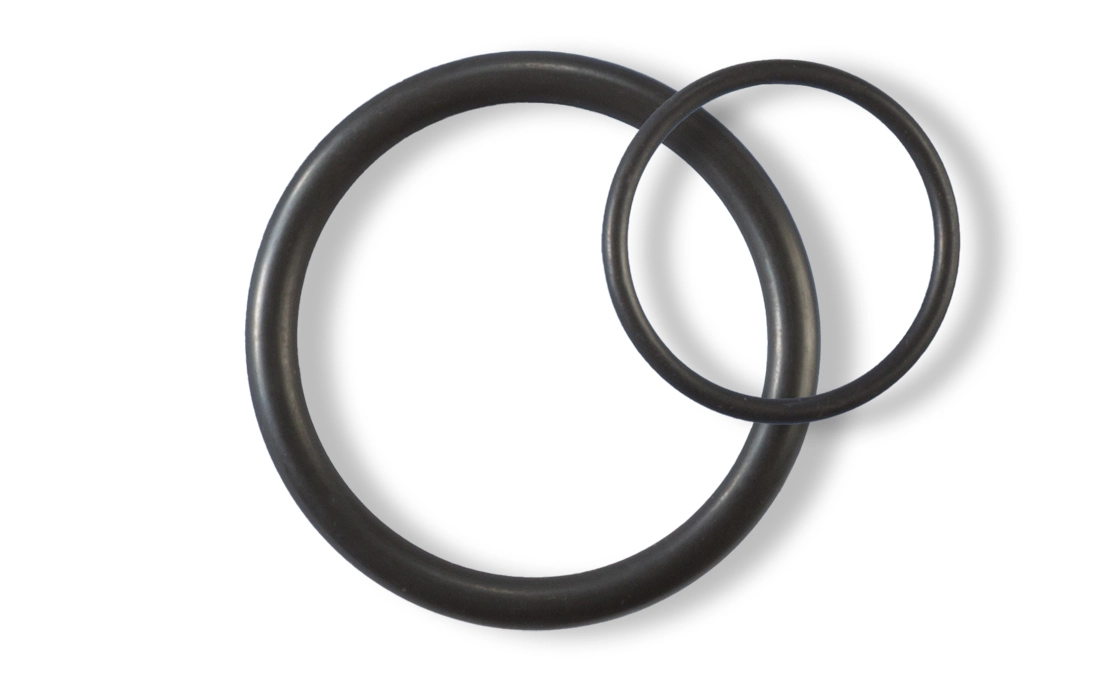
Nitrile rubber, or acrylonitrile butadiene rubber (NBR), has long been a staple in sealing applications involving petroleum-based fluids. Its resistance to oils and fuels makes it particularly well-suited for oil and gas systems, where constant exposure to hydrocarbons is the norm. The nitrile O-ring remains one of the most widely used sealing solutions in these applications, providing dependable performance in hydraulic systems, pumps, valves, and other equipment exposed to petroleum-based fluids.
However, not all NBR compounds perform the same. By adjusting the acrylonitrile (ACN) content, engineers can tune the material’s properties:
- Higher ACN content improves oil and chemical resistance
- Lower ACN content enhances flexibility at lower temperatures
This balance allows NBR to be adapted for a range of applications, from cold-environment sealing to systems operating under moderate heat and pressure.
At Greene Tweed, material selection is never one-size-fits-all. Teams evaluate not only the base polymer, but also how formulation, processing, and application conditions interact to influence long-term sealing performance.
The Challenge: Hydrocarbon Exposure and Mechanical Stress
Oil and gas systems present a unique combination of challenges for elastomers. Seals must maintain integrity while exposed to:
- Continuous contact with oils, fuels, and lubricants
- Pressure cycling and mechanical movement
- Temperature fluctuations across operating environments
These conditions can lead to swelling, compression set, or material degradation, any of which can compromise sealing performance.
Engineers at Greene Tweed focus on how elastomers behave under these real-world conditions, emphasizing performance over theoretical benchmarks. This approach ensures that NBR and other materials are applied where they will deliver consistent, long-term results.
Validating Performance Through Testing
Understanding how a material performs in theory is only the starting point. In practice, sealing materials must be validated against the specific fluids, temperatures, and mechanical stresses they will encounter in service.
To evaluate NBR performance, engineers typically assess:
- Fluid compatibility: Measuring volume swell and property changes after exposure to hydrocarbons and additives
- Compression set: Determining how well a seal maintains its shape after prolonged compression and temperature exposure
- Thermal aging: Evaluating material stability over time at elevated temperatures
- Dynamic performance: Assessing wear and sealing integrity under movement and pressure cycling
This type of application-specific testing helps identify not only whether NBR is suitable, but also how it will perform over time, particularly in systems where maintenance intervals and uptime are critical.
Where NBR Performs Best

Despite the availability of higher-performance elastomers, NBR continues to be a strong solution in many oil and gas applications, particularly where conditions fall within its performance envelope.
Here are three areas where NBR continues to deliver reliable results:
1. Hydraulic and Fluid Power Systems
Hydraulic systems rely on consistent sealing performance to maintain pressure and efficiency. NBR’s resistance to petroleum-based fluids makes it a natural fit for:
- O-rings in hydraulic cylinders
- Pump and valve seals
- Fluid transfer components
Performance Advantage:
NBR maintains sealing integrity in constant contact with oils and lubricants, while offering good resistance to wear and deformation. A properly engineered nitrile rubber seal helps maintain pressure, prevent fluid leakage, and extend equipment reliability in hydraulic systems.
2. Surface Equipment and Processing Systems
In surface-level operations,such as pumps, compressors, and refining equipment, NBR seals are exposed to continuous operation and moderate temperatures.
NBR is often used in:
- Gaskets for pipeline connections
- Seals in rotating equipment
- General-purpose industrial sealing components
Performance Advantage:
Its balance of durability and cost-effectiveness makes it ideal for high-volume applications where extreme materials are not required.
3. Standard Downhole Applications
While extreme downhole environments may require advanced elastomers, NBR remains a viable option in less aggressive wells.
It is commonly used in:
- Packers and tool seals
- Drilling equipment components
- Pressure containment systems
Performance Advantage:
NBR provides reliable sealing in hydrocarbon-rich environments without the added cost of specialty materials.
NBR Compared to Alternative Elastomers
Material selection often involves tradeoffs. While NBR is widely used, it is frequently evaluated alongside other elastomers depending on application requirements.
- HNBR (Hydrogenated Nitrile Rubber): Offers improved heat resistance and mechanical strength, making it suitable for more demanding environments where standard NBR may reach its limits. HNBR is also used in applications requiring heat resistant O-rings, where its enhanced thermal stability, chemical resistance, and durability provide reliable sealing performance under elevated temperatures and harsh operating conditions.
- FKM (Fluoroelastomers): Provides superior chemical and temperature resistance, particularly in aggressive fluids and higher-temperature applications.
- FFKM (Perfluoroelastomers): Designed for extreme environments, delivering near-universal chemical resistance and high-temperature performance.
Each of these materials expands performance capabilities—but also comes with increased cost.
The role of NBR, then, is not to compete at the extremes, but to provide a dependable, efficient solution for applications where its performance characteristics align with operating conditions.
Engineering Beyond the Material
Material selection is only part of the equation. Seal performance depends on how that material is designed, manufactured, and applied.
Greene Tweed approaches sealing challenges by combining material science with application engineering. This includes:
- Evaluating compression set behavior under real operating conditions
- Testing compatibility with specific fluids and additives
- Designing seal geometries that optimize performance and longevity
This integrated approach ensures that even widely used materials like NBR are applied in ways that maximize reliability.
When to Consider Alternatives
While nitrile rubber is highly effective, it is not suited for every environment. As operating conditions become more aggressive, its limitations become more apparent.
These include:
- Limited resistance to high temperatures compared to advanced elastomers
- Sensitivity to ozone and environmental aging
- Reduced performance in highly aggressive chemical environments
In these cases, Greene Tweed works with customers to evaluate alternative materials based on the specific demands of the application, ensuring that performance, and cost are all considered.
Extending Performance Through Material Innovation
Even within the NBR family, innovation continues to expand performance capabilities. Advances in compounding and processing allow for:
- Improved temperature resistance
- Enhanced mechanical strength
- Better resistance to compression set
These improvements help extend the usable range of NBR, making it viable in applications that previously required more expensive materials.
Greene Tweed’s material development efforts focus on precisely these kinds of enhancements, ensuring that customers have access to solutions that balance performance, reliability, and cost.
A Practical Approach to Material Selection
In oil and gas, overengineering can be just as costly as underengineering. Selecting the most advanced material isn’t always the right choice, especially if the application doesn’t require it.
NBR continues to play an important role because it offers:
- Proven performance in hydrocarbon environments
- Reliable mechanical properties
- Cost efficiency for large-scale use
The challenge is identifying where it delivers the most value and where alternative materials are justified.
This is where Greene Tweed’s application expertise becomes critical. By working closely with customers, their teams help match materials to operating conditions, ensuring that each sealing solution is optimized for its specific environment.
Looking Ahead
As oil and gas operations evolve, so will the demands placed on sealing materials. Higher pressures, more complex chemistries, and increased focus on efficiency will continue to push materials to their limits.
At the same time, foundational materials like NBR will remain part of the solution provided they are applied thoughtfully and engineered correctly.
By combining deep material knowledge with real-world testing and application insight, Greene Tweed continues to help customers navigate these challenges, delivering sealing solutions that perform where it matters most.
Partnering for Reliable Sealing Performance
Are you selecting the right material for your sealing application?
Greene Tweed’s team of engineers and material scientists can help evaluate your operating conditions and recommend solutions tailored to your needs from standard NBR compounds to advanced elastomers designed for extreme environments.
Contact Greene Tweed to learn how the right sealing strategy can improve reliability, reduce downtime, and optimize performance across your operations.